If you’re planning to launch a handbag brand or expand your product line, one of the first questions you’ll ask is:
“How much does it cost to manufacture a leather bag?”
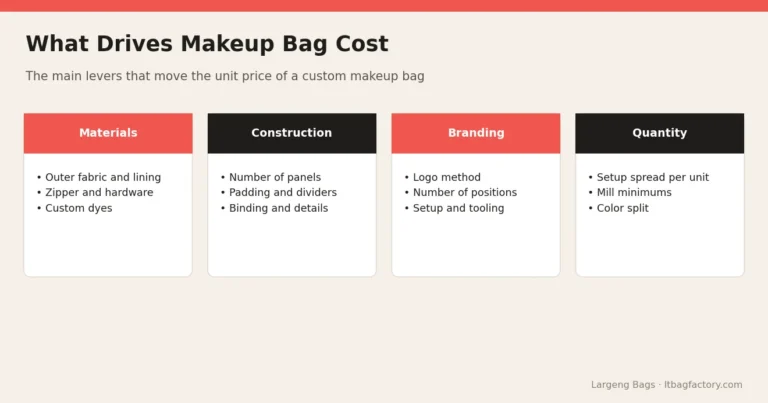
The answer depends on several factors, including materials, design complexity, order quantity, customization requirements, and manufacturing location.
In this guide, we’ll break down the key cost factors involved in leather bag production and help you understand what budget to expect when working with a professional leather bag manufacturer.
Average Cost of Manufacturing a Leather Bag
Generally speaking, the manufacturing cost of a leather bag can range from:
| Bag Type | Estimated Factory Cost |
|---|---|
| Small PU Leather Crossbody Bag | $5 – $12 |
| Genuine Leather Tote Bag | $15 – $40 |
| Premium Full Grain Leather Bag | $35 – $100+ |
| Luxury Designer Style Handbag | $50 – $200+ |
These prices are factory costs and do not include shipping, import duties, warehousing, or retail markups.
1. Material Cost
Material is usually the largest cost component.
Common materials include:
PU Leather
Advantages:
- Affordable
- Lightweight
- Wide color selection
Cost Impact:
Low
Suitable for:
- Fashion brands
- Promotional products
- Fast-fashion retailers
Genuine Leather
Advantages:
- Durable
- Premium appearance
- Better customer perception
Cost Impact:
Medium to High
Suitable for:
- Private label brands
- Luxury brands
- Boutique retailers
Full Grain Leather
Advantages:
- Highest quality
- Long lifespan
- Premium branding value
Cost Impact:
High
Suitable for:
- Luxury handbags
- Premium collections
2. Design Complexity
A simple tote bag may require only a few production steps.
A luxury handbag can involve:
- Multiple compartments
- Metal hardware
- Zippers
- Reinforced stitching
- Edge painting
- Embossed logos
The more complex the design, the higher the labor cost.
Typical labor accounts for 20%–40% of total manufacturing cost.
3. Customization Requirements
Many brands choose custom features such as:
Logo Embossing
- Debossed logo
- Foil-stamped logo
- Embossed logo
Custom Hardware
- Custom zipper pulls
- Custom buckles
- Custom metal plates
Custom Packaging
- Dust bags
- Gift boxes
- Hang tags
- Care cards
These elements can significantly increase unit costs but also improve brand value and customer experience.
4. Order Quantity (MOQ)
MOQ has a major impact on pricing.
Example:
| Quantity | Estimated Unit Cost |
|---|---|
| 100 pcs | $28 |
| 300 pcs | $22 |
| 500 pcs | $19 |
| 1000 pcs | $16 |
Higher quantities spread development and tooling costs across more units, reducing the average price.
5. Sample Development Cost
Before mass production, most manufacturers create prototypes.
Typical sample costs:
- Simple bag: $50–$100
- Complex handbag: $100–$300
- Luxury leather bag: $300+
Many manufacturers refund sample fees once bulk production begins.
6. Manufacturing Location
Production costs vary by country.
China
Advantages:
- Competitive pricing
- Mature supply chain
- Fast lead times
- Strong customization capability
Vietnam
Advantages:
- Competitive labor costs
- Growing manufacturing sector
Italy
Advantages:
- Luxury craftsmanship
- High-end brand positioning
However, Italian production costs can be several times higher than those of Asian manufacturers.
Example Cost Breakdown
Let’s assume you’re producing a genuine leather handbag.
| Cost Item | Estimated Cost |
|---|---|
| Leather Material | $8.50 |
| Lining Material | $1.20 |
| Hardware | $2.00 |
| Labor | $5.50 |
| Packaging | $1.00 |
| Quality Inspection | $0.50 |
| Total Factory Cost | $18.70 |
For a retail brand, the final selling price may range from $79 to $199 depending on positioning and marketing strategy.
How to Reduce Manufacturing Costs
Here are several proven ways to lower production costs:
Increase Order Quantity
Larger orders generally receive better pricing.
Simplify Design
Reducing pockets, hardware, and decorative elements lowers labor costs.
Standardize Components
Using existing hardware molds can avoid expensive tooling fees.
Choose the Right Materials
High-quality PU leather can provide an excellent balance between appearance and affordability.
Work with an Experienced Manufacturer
An experienced factory can optimize production efficiency and reduce costly mistakes.
Choosing the Right Leather Bag Manufacturer
When selecting a manufacturing partner, consider:
- Factory experience
- OEM & ODM capabilities
- Quality control system
- Material sourcing network
- Sample development support
- Production capacity
- International export experience
A reliable manufacturer should help you reduce costs while maintaining product quality and brand standards.
Final Thoughts
The cost of manufacturing a leather bag depends on multiple factors, including materials, design complexity, customization requirements, and order volume.
For most private label brands, the best approach is to balance quality, functionality, and budget while partnering with a trusted manufacturer that understands your business goals.
Whether you’re launching a new handbag collection or scaling an existing brand, understanding these cost factors will help you make informed sourcing decisions and maximize profitability.
Request a Free Quotation
Looking for a reliable leather bag manufacturer?
Our team provides:
✓ OEM & ODM Manufacturing
✓ Custom Logo & Packaging
✓ Sample Development
✓ Low MOQ Options
✓ Worldwide Export Experience
Contact us today to receive a free quotation and start your custom bag project.
Related Guides
- How Much Does It Cost To Manufacture Custom Handbags?
- How Long Does It Take to Manufacture Custom Bags? (Production Timeline Explained)
- How to Reduce Custom Bag Costs While Keeping Key Requirements
- Beyond the Fabric: How Minor Hardware and Stitching Choices Impact Total Bag Manufacturing Costs (An Insider’s Cost-Control Guide)
- Leather bag and handbag manufacturing — request a quote from our Quanzhou factory