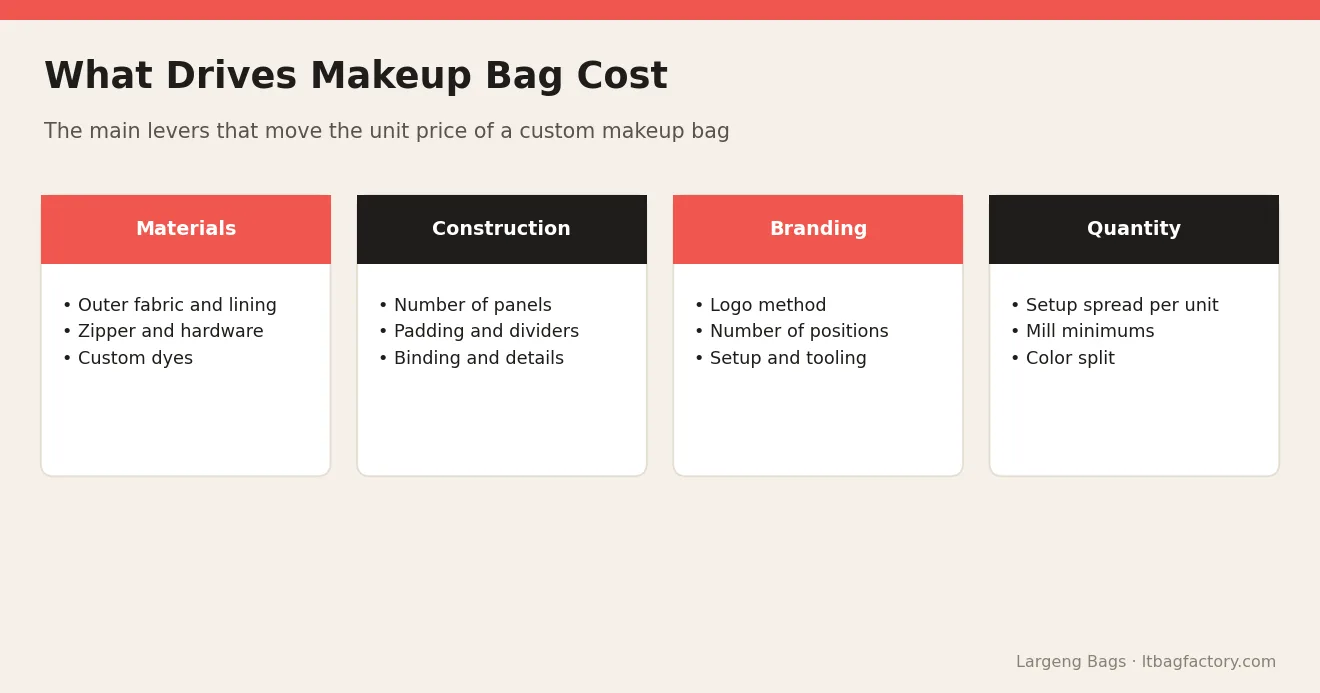
Makeup bag manufacturing cost is driven mainly by five factors: materials, construction complexity, logo method, order quantity and packaging. Labor and overhead matter too, but they scale with how complicated the bag is. This guide explains how each factor moves the unit price, compares building your own makeup bag manufacturing plant with outsourcing to an OEM factory, and outlines production solutions for different budgets, without quoting figures that depend on your exact specification.
The Main Cost Drivers in a Makeup Bag
| Cost driver | What raises it | What keeps it controlled |
|---|---|---|
| Materials | Genuine leather, specialty PVC, premium linings | Polyester, cotton, standard PU leather |
| Construction | Many panels, boxed base, padding, compartments | Flat pouch, one zipper, simple lining |
| Hardware | Metal pullers, custom zippers, feet | Standard zippers and pullers |
| Branding | Multiple logo methods and positions | One method in one position |
| Packaging | Gift boxes, custom inserts | Polybag with sticker or hang tag |
Understanding these levers helps you decide where to spend and where to simplify. For why the same design may be priced differently by different suppliers, see why custom bag quotes vary.
Material Choices and Their Cost Impact
Materials are usually the largest part of the unit cost. The outer fabric, lining, interlining and zipper are all specified separately, and each has quality grades.
| Material | Relative cost level (typical) | Notes |
|---|---|---|
| Polyester or non-woven PP | Lower | Popular for promotions and gift kits |
| Cotton or canvas | Lower to medium | Varies with fabric weight and dyeing |
| Nylon | Medium | Coatings and finishes affect cost |
| PVC | Lower to medium | Thickness and finish change cost |
| PU leather | Medium | Wide grade range |
| Genuine leather | Higher | Hide quality drives price |
Custom-dyed colors and special finishes can also add cost or minimums, because the mill needs a dedicated run.
Material weight and coating also influence cost. A heavier canvas or a thicker PVC film uses more raw material and may need stronger needles, thread and binding. Specify the performance you need, and ask the factory to suggest the lightest material that meets it.
Construction Complexity: Panels, Linings and Compartments
Every extra panel adds cutting, sewing and inspection time. A flat zip pouch might have only two outer panels and a lining, while a boxed makeup case can include gussets, reinforcement, dividers and binding.
Small details add up: piping, contrast stitching, inner pockets, handles and labels each add a step. None of them is wrong, but each should earn its place in the design.
Linings follow the same logic. A printed or coated lining costs more than a plain one, and padded or quilted panels add both material and sewing time. Where the inside of the bag is rarely seen, a simpler lining is often a sensible place to save.
Logo Method and Branding Costs
Screen printing is usually efficient for one or two colors, while heat transfer printing suits multicolor artwork. Embroidery, rubber patches, woven labels and metal plates look more premium but typically involve setup such as screens, molds or digitizing.
The number of logo positions matters as much as the method. A single printed logo on the front is simpler than a printed front, embroidered patch and custom zipper puller on the same bag.
Artwork preparation can help as well. Vector files with clear Pantone references reduce setup time and color adjustments, and keeping logo sizes consistent across styles allows the same screens or molds to be reused.
Order Quantity and Setup Costs
Setup work, such as pattern making, sampling, cutting dies, print screens and material sourcing, is shared across the order. Larger quantities spread that setup over more units, which is why unit prices typically fall as quantity rises.
Material suppliers also have their own minimums. Read bag MOQ explained to see how factory and mill minimums interact.
Reorders also matter. Once patterns, dies and screens are made, a repeat order of the same design usually avoids much of the original setup, which is one reason brands often keep a core style unchanged across seasons and refresh only colors.
Makeup Bag Manufacturing Plant Cost vs Outsourcing
Some brands consider setting up their own production. The makeup bag manufacturing plant cost goes well beyond sewing machines:
- Factory space, utilities and compliance with local regulations
- Industrial sewing, cutting and pressing equipment, plus maintenance
- Skilled sewers, pattern makers, QC staff and supervisors
- Material sourcing relationships and inventory
- Idle capacity when orders are seasonal
For most brands, outsourcing to an established OEM factory is more flexible. Our Quanzhou facility has 5,000 m² of production space and 200+ skilled workers, so brands can scale orders up or down without carrying fixed overhead.
Owning a plant can make sense for very large, steady volumes or where a brand needs full control over a proprietary process. For most beauty and accessories brands, however, the flexibility of outsourcing outweighs the benefits of fixed production assets.
Makeup Bag Production Solutions for Different Budgets
The right production solution depends on your stage. Startups often choose ODM patterns with a logo change to limit development cost. Growing brands may adjust an existing pattern with their own materials and colors. Established brands usually develop fully custom OEM designs.
Our custom cosmetic bag manufacturing supports all three routes. For practical savings ideas, read how to reduce custom bag costs, and when offers arrive, use our guide to comparing manufacturer quotes.
Whichever route you choose, share a target price level with your specification. It allows the factory to suggest materials and construction that meet your goal instead of quoting an expensive version you may then need to redesign.
Hidden Costs Buyers Often Overlook
The factory price is only one part of what a makeup bag costs to land in your warehouse. Several smaller items are easy to miss when comparing offers.
Items to include in your budget
- Sample charges: development and courier costs for each sampling round
- Design changes: revisions after sampling can require new samples
- Testing: third-party lab tests required by some markets
- Inspection: independent pre-shipment inspection if you use one
- Freight, duties and import handling: depend on terms and destination
- Packaging extras: gift boxes, inserts, barcode labels
Adding these to your calculation gives a realistic landed cost per unit. It also shows where a design change, such as flat packing instead of a rigid box, can save more than negotiating the factory price alone.
What to Send for a Quote
The faster we understand your project, the faster you receive an accurate quotation. Please include as much of the following as you can:
- Design sketch or reference photo with dimensions
- Preferred materials, or a target price level so we can suggest options
- Logo artwork, method and positions
- Quantity per style and color
- Packaging and destination
Bulk lead time and shipping terms are confirmed on the quotation. Request a quotation and we will break down the main cost factors for your design.
Frequently Asked Questions
Why is a sample more expensive than a bulk unit?
A sample involves pattern making, material sourcing in small amounts and one-off setup for the logo, all for a single piece. In bulk production those costs are spread across the whole order. That is why sample charges are quoted separately and are often partly offset once the bulk order is confirmed.
Does changing the zipper really affect cost?
It can. Zipper size, material, tape color and puller design all influence cost, and custom-branded pullers usually need tooling. On a small pouch the zipper can be a noticeable share of materials. Standard zippers in stock colors are often the easiest saving if the puller is not a key brand element.
Is it cheaper to use one logo method across a range?
Usually yes. Using one method, such as screen printing in the same position on every style, simplifies setup, reduces handling and makes quality checks faster. Mixing embroidery, patches and printing across a range can look distinctive but adds steps. Choose the method that best fits your brand positioning.
Can I get a price before sending a full tech pack?
Yes. A reference photo, dimensions, material preference and quantity are enough for an initial estimate. The final quotation is confirmed once the specification is clear, since small changes to materials or construction can shift the price. A detailed brief simply makes the first estimate closer to the final figure.
Do colorways add to the manufacturing cost?
Additional colors can add cost when each color needs separate material purchasing, dye lots or print setups. Standard stock colors are typically the easiest to add. Splitting a quantity across many colors may also affect per-color minimums, which we confirm on the quotation after reviewing your material and color choices.