Best Materials for Reusable Shopping Bags
Short answer: The best material for reusable shopping bags depends on your purpose. Cotton and canvas are good for natural branding and daily use. Non-woven is cost-effective for supermarkets and promotions. rPET is suitable for recycled-material campaigns. Jute gives a natural eco look. Nylon and polyester are useful for foldable and lightweight shopping bags.
Reusable shopping bags are used by grocery stores, retail chains, fashion brands, promotional campaigns, gift programs and sustainable packaging projects. The material you choose affects cost, durability, printing result, appearance, shipping weight and customer experience.
Need reusable shopping bags for your brand? Largeng Bags manufactures cotton bags, canvas bags, non-woven shopping bags, jute bags, rPET bags and custom retail bags. Send your material preference, size, quantity and logo for a quote.
How to Choose a Reusable Bag Material
There is no single best material for every order. A supermarket may need low-cost bags that can carry groceries. A fashion brand may need a premium bag that matches its packaging. A sustainability campaign may need recycled material and clear documentation. Start by defining the main use case before comparing prices.
- For low-cost bulk promotions, consider non-woven bags.
- For premium retail branding, consider cotton canvas or heavy canvas.
- For recycled-material campaigns, consider rPET or recycled cotton.
- For natural product brands, consider jute or cotton.
- For foldable bags, consider polyester, nylon or lightweight rPET.
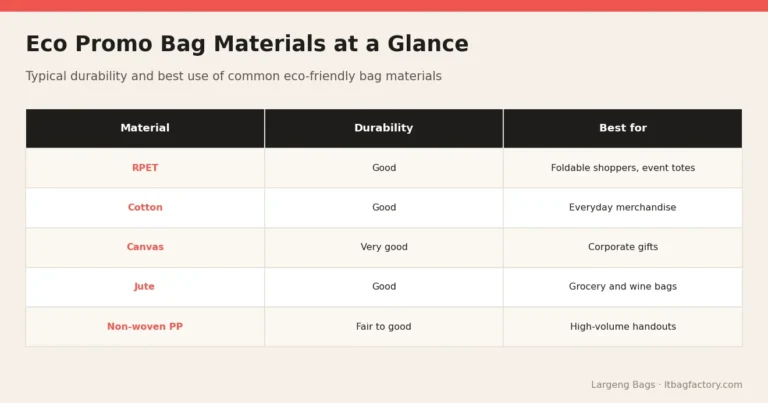
Material Comparison Table
| Material | Best For | Main Advantage | Buyer Note |
|---|---|---|---|
| Cotton | Events, bookstores, light retail | Natural look and soft feel | Choose fabric weight based on use |
| Canvas | Premium retail, gifts, daily carry | Strong and durable | Heavier fabric increases cost |
| Non-woven | Supermarkets, trade shows, mass giveaways | Low cost and lightweight | Best for budget-sensitive campaigns |
| rPET | Recycled-material programs | Made from recycled PET material | Ask for material documentation if needed |
| Jute | Grocery, natural brands, eco campaigns | Rustic natural texture | Print result differs from smooth fabric |
| Polyester or nylon | Foldable shopping bags | Lightweight and compact | Good for travel and daily convenience |
Cotton Shopping Bags
Cotton bags are popular because they look natural, feel soft and work well with simple logo printing. They are suitable for bookstores, schools, events, coffee shops, gift programs and light retail packaging. Cotton bags can be made in different fabric weights, from lightweight promotional bags to thicker everyday tote bags.
Choose cotton when you want a clean, natural brand image and a practical reusable bag. If the bag needs to carry heavy items regularly, consider a heavier cotton canvas instead of thin cotton.
Canvas Shopping Bags
Canvas is stronger and more structured than many lightweight cotton fabrics. It is a good choice for premium tote bags, retail merchandise, corporate gifts and long-term daily use. Canvas bags can include zippers, inner pockets, lining, reinforced handles, woven labels and embroidery.
Canvas costs more than basic promotional materials, but it creates a better customer impression. It is especially useful when the bag is part of the product experience rather than only a giveaway.
Non-Woven Shopping Bags
Non-woven bags are one of the most common choices for supermarkets, trade shows, exhibitions and promotional events. They are lightweight, affordable and easy to customize in large quantities. They can be made with gussets, reinforced handles, laminated surfaces and colorful printing.
Choose non-woven bags when quantity and budget are the main priorities. They are practical for campaigns where the bag needs to be useful, visible and cost-controlled.
rPET Reusable Bags
rPET fabric is made from recycled PET material and is often used for brands that want a recycled-material story. It can be used for shopping bags, foldable bags, cooler bags and promotional bags. rPET can be a strong option for sustainability campaigns when the material claim is supported clearly.
If recycled content is important for your buyer or market, ask the supplier what documentation is available. Clear material information is better than vague eco-friendly wording.
Jute Shopping Bags
Jute bags have a rustic natural appearance and are often used for grocery stores, farm shops, wine shops, natural food brands, garden centers and eco campaigns. They can be combined with cotton handles, laminated lining or printed panels.
Because jute has a rougher texture, very detailed artwork may not print as sharply as it would on cotton or laminated non-woven fabric. It works best with simple, bold logos and natural-style branding.
Polyester and Nylon Foldable Bags
Polyester and nylon are useful for foldable shopping bags because they are lightweight, compact and easy to carry. These bags are popular for travel, daily shopping, subscription boxes, retail giveaways and convenience-focused promotions.
Foldable bags can include a pouch, snap button, hook, elastic band or built-in pocket. If your customers need a bag they can keep in a handbag, backpack or car, this material category is worth considering.
Printing and Branding by Material
| Material | Common Branding Options | Best Artwork Style |
|---|---|---|
| Cotton | Screen printing, embroidery, woven label | Simple logos and text |
| Canvas | Screen printing, embroidery, patch, label | Premium brand marks |
| Non-woven | Screen printing, heat transfer, lamination | Event logos and promotional graphics |
| rPET | Screen printing, heat transfer, woven label | Recycled-material campaign branding |
| Jute | Screen printing, cotton panel printing, label | Bold natural-style logos |
| Polyester or nylon | Screen printing, heat transfer, sublimation | Colorful foldable bag designs |
Final Thoughts
The best reusable shopping bag material is the one that fits the purpose of your order. Use non-woven for affordable high-volume campaigns, canvas for premium long-term use, cotton for natural everyday branding, rPET for recycled-material programs, jute for rustic eco campaigns and polyester or nylon for foldable convenience bags.
Not sure which material to choose? Contact Largeng Bags with your target market, quantity, logo and budget. We can help you compare materials and choose a practical reusable shopping bag solution.
FAQ
What is the most affordable material for reusable shopping bags?
Non-woven fabric is usually one of the most affordable materials for large-volume reusable shopping bag orders.
Which material is best for premium reusable bags?
Canvas is usually the best choice for premium reusable bags because it is stronger, more durable and better suited for retail branding.
Are rPET bags good for sustainability campaigns?
Yes. rPET bags are suitable for recycled-material campaigns, especially when the supplier can explain the recycled material source and provide documentation if required.
URL Slug: best-materials-for-reusable-shopping-bags
Meta Description: Compare the best materials for reusable shopping bags, including cotton, canvas, non-woven, rPET, jute, nylon and laminated options for retail and promotional use.
Best Materials for Reusable Shopping Bags
Short answer: The best material for reusable shopping bags depends on your purpose. Cotton and canvas are good for natural branding and daily use. Non-woven is cost-effective for supermarkets and promotions. rPET is suitable for recycled-material campaigns. Jute gives a natural eco look. Nylon and polyester are useful for foldable and lightweight shopping bags.
Reusable shopping bags are used by grocery stores, retail chains, fashion brands, promotional campaigns, gift programs and sustainable packaging projects. The material you choose affects cost, durability, printing result, appearance, shipping weight and customer experience.
Need reusable shopping bags for your brand? Largeng Bags manufactures cotton bags, canvas bags, non-woven shopping bags, jute bags, rPET bags and custom retail bags. Send your material preference, size, quantity and logo for a quote.
How to Choose a Reusable Bag Material
There is no single best material for every order. A supermarket may need low-cost bags that can carry groceries. A fashion brand may need a premium bag that matches its packaging. A sustainability campaign may need recycled material and clear documentation. Start by defining the main use case before comparing prices.
- For low-cost bulk promotions, consider non-woven bags.
- For premium retail branding, consider cotton canvas or heavy canvas.
- For recycled-material campaigns, consider rPET or recycled cotton.
- For natural product brands, consider jute or cotton.
- For foldable bags, consider polyester, nylon or lightweight rPET.
Material Comparison Table
| Material | Best For | Main Advantage | Buyer Note |
|---|---|---|---|
| Cotton | Events, bookstores, light retail | Natural look and soft feel | Choose fabric weight based on use |
| Canvas | Premium retail, gifts, daily carry | Strong and durable | Heavier fabric increases cost |
| Non-woven | Supermarkets, trade shows, mass giveaways | Low cost and lightweight | Best for budget-sensitive campaigns |
| rPET | Recycled-material programs | Made from recycled PET material | Ask for material documentation if needed |
| Jute | Grocery, natural brands, eco campaigns | Rustic natural texture | Print result differs from smooth fabric |
| Polyester or nylon | Foldable shopping bags | Lightweight and compact | Good for travel and daily convenience |
Cotton Shopping Bags
Cotton bags are popular because they look natural, feel soft and work well with simple logo printing. They are suitable for bookstores, schools, events, coffee shops, gift programs and light retail packaging. Cotton bags can be made in different fabric weights, from lightweight promotional bags to thicker everyday tote bags.
Choose cotton when you want a clean, natural brand image and a practical reusable bag. If the bag needs to carry heavy items regularly, consider a heavier cotton canvas instead of thin cotton.
Canvas Shopping Bags
Canvas is stronger and more structured than many lightweight cotton fabrics. It is a good choice for premium tote bags, retail merchandise, corporate gifts and long-term daily use. Canvas bags can include zippers, inner pockets, lining, reinforced handles, woven labels and embroidery.
Canvas costs more than basic promotional materials, but it creates a better customer impression. It is especially useful when the bag is part of the product experience rather than only a giveaway.
Non-Woven Shopping Bags
Non-woven bags are one of the most common choices for supermarkets, trade shows, exhibitions and promotional events. They are lightweight, affordable and easy to customize in large quantities. They can be made with gussets, reinforced handles, laminated surfaces and colorful printing.
Choose non-woven bags when quantity and budget are the main priorities. They are practical for campaigns where the bag needs to be useful, visible and cost-controlled.
rPET Reusable Bags
rPET fabric is made from recycled PET material and is often used for brands that want a recycled-material story. It can be used for shopping bags, foldable bags, cooler bags and promotional bags. rPET can be a strong option for sustainability campaigns when the material claim is supported clearly.
If recycled content is important for your buyer or market, ask the supplier what documentation is available. Clear material information is better than vague eco-friendly wording.
Jute Shopping Bags
Jute bags have a rustic natural appearance and are often used for grocery stores, farm shops, wine shops, natural food brands, garden centers and eco campaigns. They can be combined with cotton handles, laminated lining or printed panels.
Because jute has a rougher texture, very detailed artwork may not print as sharply as it would on cotton or laminated non-woven fabric. It works best with simple, bold logos and natural-style branding.
Polyester and Nylon Foldable Bags
Polyester and nylon are useful for foldable shopping bags because they are lightweight, compact and easy to carry. These bags are popular for travel, daily shopping, subscription boxes, retail giveaways and convenience-focused promotions.
Foldable bags can include a pouch, snap button, hook, elastic band or built-in pocket. If your customers need a bag they can keep in a handbag, backpack or car, this material category is worth considering.
Printing and Branding by Material
| Material | Common Branding Options | Best Artwork Style |
|---|---|---|
| Cotton | Screen printing, embroidery, woven label | Simple logos and text |
| Canvas | Screen printing, embroidery, patch, label | Premium brand marks |
| Non-woven | Screen printing, heat transfer, lamination | Event logos and promotional graphics |
| rPET | Screen printing, heat transfer, woven label | Recycled-material campaign branding |
| Jute | Screen printing, cotton panel printing, label | Bold natural-style logos |
| Polyester or nylon | Screen printing, heat transfer, sublimation | Colorful foldable bag designs |
Final Thoughts
The best reusable shopping bag material is the one that fits the purpose of your order. Use non-woven for affordable high-volume campaigns, canvas for premium long-term use, cotton for natural everyday branding, rPET for recycled-material programs, jute for rustic eco campaigns and polyester or nylon for foldable convenience bags.
Not sure which material to choose? Contact Largeng Bags with your target market, quantity, logo and budget. We can help you compare materials and choose a practical reusable shopping bag solution.
FAQ
What is the most affordable material for reusable shopping bags?
Non-woven fabric is usually one of the most affordable materials for large-volume reusable shopping bag orders.
Which material is best for premium reusable bags?
Canvas is usually the best choice for premium reusable bags because it is stronger, more durable and better suited for retail branding.
Are rPET bags good for sustainability campaigns?
Yes. rPET bags are suitable for recycled-material campaigns, especially when the supplier can explain the recycled material source and provide documentation if required.