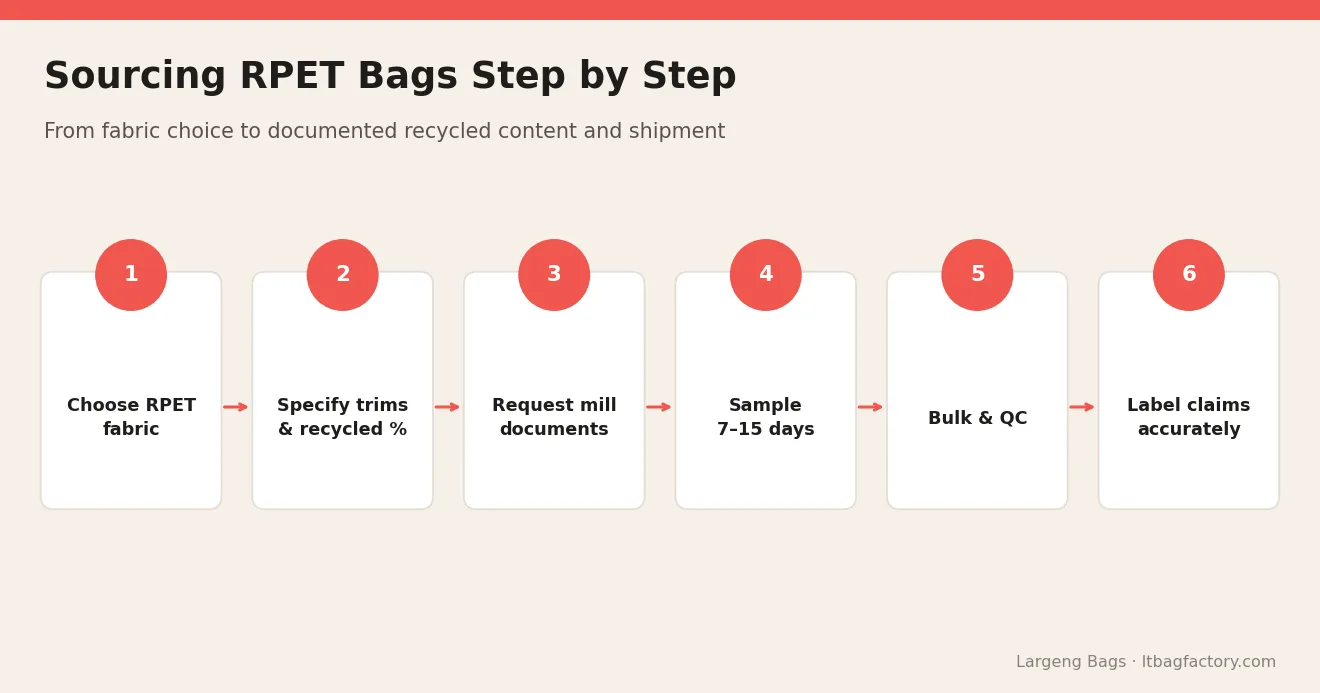
RPET bags are made from fabric spun from recycled PET, mostly post-consumer plastic bottles, instead of virgin polyester. For brands and distributors, sourcing RPET bags from a recycled bag factory in China means choosing the right RPET fabric, confirming the recycled content with paperwork from the supply chain, and specifying print and trims that suit the material. This guide covers each step, the cost drivers and the marketing claims worth avoiding.
What RPET Is and Why Buyers Choose It
RPET stands for recycled polyethylene terephthalate. Used PET bottles are collected, sorted, washed and turned into flakes, which are then melted and extruded into chips or directly spun into polyester yarn. That yarn is woven, knitted or bonded into fabric in the same way as virgin polyester.
Because the finished fabric behaves much like standard polyester, RPET can replace virgin polyester in many bag styles without major changes to the pattern or sewing method. Buyers usually choose it for three reasons:
- A retailer or corporate client has asked for recycled materials in the brief
- The brand wants a lower reliance on virgin fossil-based fibres
- It fits a wider sustainability story that is backed by supply-chain documents
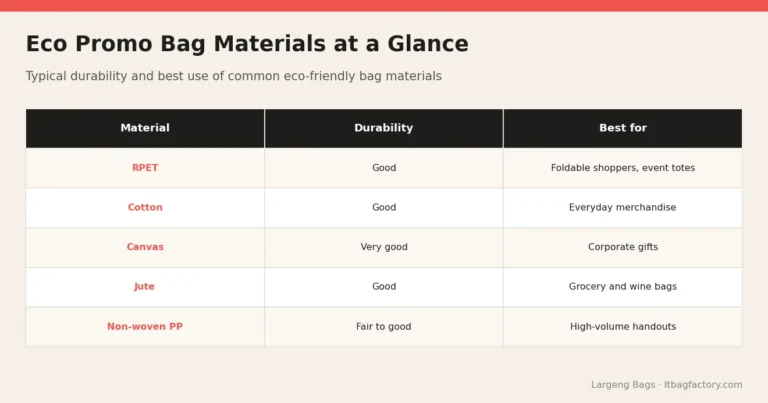
RPET is one option among several sustainable materials. If you are still comparing it with cotton, jute or non-woven PP, start with our sustainable bag materials and sourcing guide. This article focuses only on buying RPET well.
RPET Fabric Types for Sustainable Bag Production
“RPET” describes the fibre, not the fabric construction. For sustainable bag production, the construction matters as much as the recycled content, because it decides strength, hand-feel and print quality.
| RPET fabric | How it is made | Typical feel | Common bag uses |
|---|---|---|---|
| RPET non-woven | Recycled fibres bonded by heat or needle-punching, not woven | Light, paper-like, low cost per bag | Giveaway totes, event bags, shopping bags |
| RPET woven polyester (plain or Oxford weave) | Recycled yarn woven into a stable fabric, often with a PU or PVC-free coating | Firm, durable, smooth print surface | Backpacks, drawstring bags, cosmetic pouches |
| RPET canvas-look or twill | Heavier recycled yarn in a textured weave | Soft, closer to cotton canvas | Retail totes, lifestyle bags |
| Laminated RPET | RPET woven or non-woven with a film layer on the face | Glossy or matte, water-resistant, full-colour ready | Photo-printed shoppers, reusable retail bags |
Note that lamination and some coatings add non-recycled material to the bag. If recyclability at end of life matters to your client, discuss the coating and film with the factory before sampling. For a non-RPET comparison of the two most common promo fabrics, see canvas vs non-woven bags for promotional orders.
Bag Types a Recycled Bag Factory Can Make in RPET
Most bag styles that use polyester can be switched to an RPET equivalent. The practical question is whether every visible component can follow.
| Bag type | Suitable RPET fabric | Components to check |
|---|---|---|
| Tote and shopping bags | Non-woven, laminated or woven RPET | Handle webbing, reinforcement stitching |
| Backpacks | Woven RPET, often 300D–600D | Webbing, zippers, lining, foam padding |
| Drawstring bags | Woven RPET polyester | Cords, eyelets, corner reinforcements |
| Cosmetic pouches | Woven or coated RPET | Zipper tape, lining, puller |
Zipper tape, webbing, labels and lining can often be sourced in recycled polyester as well, but availability varies by colour and size. Decide early whether “RPET bag” means the main fabric only or the whole bag, and write it on the specification. Explore styles on our tote bag manufacturer page and backpack manufacturer page.
How to Verify Recycled Content in RPET Bags
Recycled PET fabric and virgin polyester look almost identical, so the recycled claim rests on documents, not on appearance. Buyers who need to substantiate the claim typically request paperwork that traces the material back to the fabric mill.
- Ask which mill supplies the fabric. The recycled content is established at yarn and fabric level, so the documentation starts there.
- Request recycled-content documentation. Many buyers ask the fabric mill for a recycled-content declaration and, where the chain is certified under a standard such as GRS, transaction certificates that cover the specific shipment.
- Match documents to your order. Check that the fabric description, weight and quantity on the paperwork align with your bill of materials.
- Keep a fabric swatch and records. Retain the approved swatch, the mill documents and the purchase order together for audits or retailer questions.
- Confirm the percentage. Fabrics may be 100% or partly recycled; state the required recycled content in the specification.
Certification schemes apply to each company in the chain, so ask your supplier early what documentation can be provided for your order. At Largeng Bags we source RPET fabric on request and confirm material options, and what paperwork the fabric supplier can supply, on the quotation.
Printing and Logo Options on RPET
RPET takes most of the same logo methods as standard polyester, but results depend on fabric surface and weight.
- Screen printing suits woven and non-woven RPET for solid colours and larger runs.
- Heat transfer printing handles gradients and full-colour artwork on smooth woven RPET.
- Laminated faces allow photo-quality printing before the film is applied.
- Embroidery, woven labels and rubber patches work best on heavier woven RPET.
- Hang tags are a practical place to explain the recycled material to end users.
Heat settings for transfers need care on lighter RPET non-woven, so always approve a printed sample. Our custom bag sampling process explains what to check before bulk.
Factory Price Drivers: RPET vs Virgin Polyester
Buyers searching for factory price on sustainable bag materials often expect RPET to cost the same as polyester. In practice, several factors typically move the price:
| Cost driver | Why it matters for RPET |
|---|---|
| Recycled content level | Higher recycled percentages can narrow the choice of mills |
| Colour | Stock colours are usually easier than custom-dyed recycled fabric |
| Fabric construction | Denier, weave, coating and lamination all change the fabric cost |
| Recycled trims | RPET webbing, zippers and labels may carry minimum quantities of their own |
| Documentation | Chain-of-custody paperwork can add administration along the supply chain |
| Order quantity | Custom RPET fabric is often ordered by the roll, so small runs spread costs thinly |
Pricing is confirmed on the quotation for your exact specification, so share the recycled percentage, colour and trims you need at the start.
Marketing Claims to Avoid (Greenwashing)
Regulators and retailers in many markets look closely at environmental claims. Claims on RPET bags should be specific and supported by the documents you hold.
- Avoid vague terms such as “eco-friendly” or “green” on their own; say “main fabric made from recycled polyester” instead.
- Do not say “100% recycled” if trims, lining or coatings are virgin material.
- Do not imply the bag is biodegradable or compostable; polyester, recycled or not, is neither.
- Avoid naming a certification on the product unless the chain is certified and the rules for labelling are followed.
- Keep any bottle-count claim tied to a calculation you can show.
Clear, modest claims protect the brand and make retailer reviews easier.
What to Send for a Quote
For an ODM recycled bag factory quotation, please send:
- Bag type, size and a reference photo or tech pack
- RPET fabric preference (non-woven, woven, laminated) and required recycled percentage
- Whether trims, webbing and lining must also be recycled
- Colours, logo artwork and print method
- Documentation you need from the supply chain
- Quantity per design, packing and destination country
Largeng Bags is an OEM and ODM bag manufacturer in Quanzhou with 15+ years of experience and buyers in 30+ countries. Samples take 7–15 days; MOQ depends on style, material and logo method and is confirmed on the quotation. Send your brief through our contact page.
Frequently Asked Questions
Is RPET as durable as virgin polyester?
For most bag uses, woven RPET performs similarly to virgin polyester of the same denier and construction. Durability depends more on fabric weight, weave, coating and stitching than on whether the yarn is recycled. Approving a sample and checking seams, handles and zipper areas is the best way to confirm it suits your bag style.
Can RPET bags be made in custom colours?
Yes, recycled yarn and fabric can usually be dyed to a Pantone reference, although custom colours often carry a fabric minimum per colour. Stock colours tend to be quicker and simpler. Send your colour references with the enquiry so the factory can check what recycled fabric options match before quoting.
Can I mix RPET and other materials in one bag?
Yes, many bags combine an RPET outer with other linings, trims or leather-look details. The trade-off is that the recycled claim should then refer only to the RPET parts. Mixed materials can also make recycling at end of life harder, so decide which matters more for your programme.
Does RPET non-woven differ from standard non-woven PP?
Yes. Standard non-woven promo bags are usually made from polypropylene, while RPET non-woven is made from recycled polyester fibres. They look similar, but the polymer differs. Specify the exact fabric on your order and ask for documentation so the correct material is used and described accurately.
How should I label RPET bags for retail?
Use a specific statement such as the main fabric’s recycled content, supported by the documents from your supply chain. Include fibre content and care information as your market requires. A hang tag or woven label can carry the message, keeping the printed design clean while still explaining the material to shoppers.