Eco-friendly promotional bags are reusable branded bags made from lower-impact materials such as recycled polyester (RPET), jute, cotton, canvas, kraft paper or non-woven PP. The greenest choice is usually the bag people keep and reuse, so material, construction and design all matter. This guide compares eco friendly bags materials for promotional use, explains what drives factory price, and shows what to ask an eco friendly promo bag factory before you order.
What Makes Eco-Friendly Promotional Bags Genuinely Sustainable
A bag is only as sustainable as its use. A heavy cotton tote that is used once has a larger footprint than a light non-woven bag used for years. For promotional programmes, focus on three questions:
- Will people reuse it? Size, handle comfort and design decide whether the bag leaves the event hall.
- Is the material claim accurate? Recycled or organic claims should be backed by supplier documentation.
- Can it be repaired, recycled or composted? Mixed materials and heavy coatings make end-of-life harder.
This article focuses on promotional orders. For a broader look at materials and certification schemes, read our sustainable bags sourcing guide.
Eco Friendly Bags Materials Compared
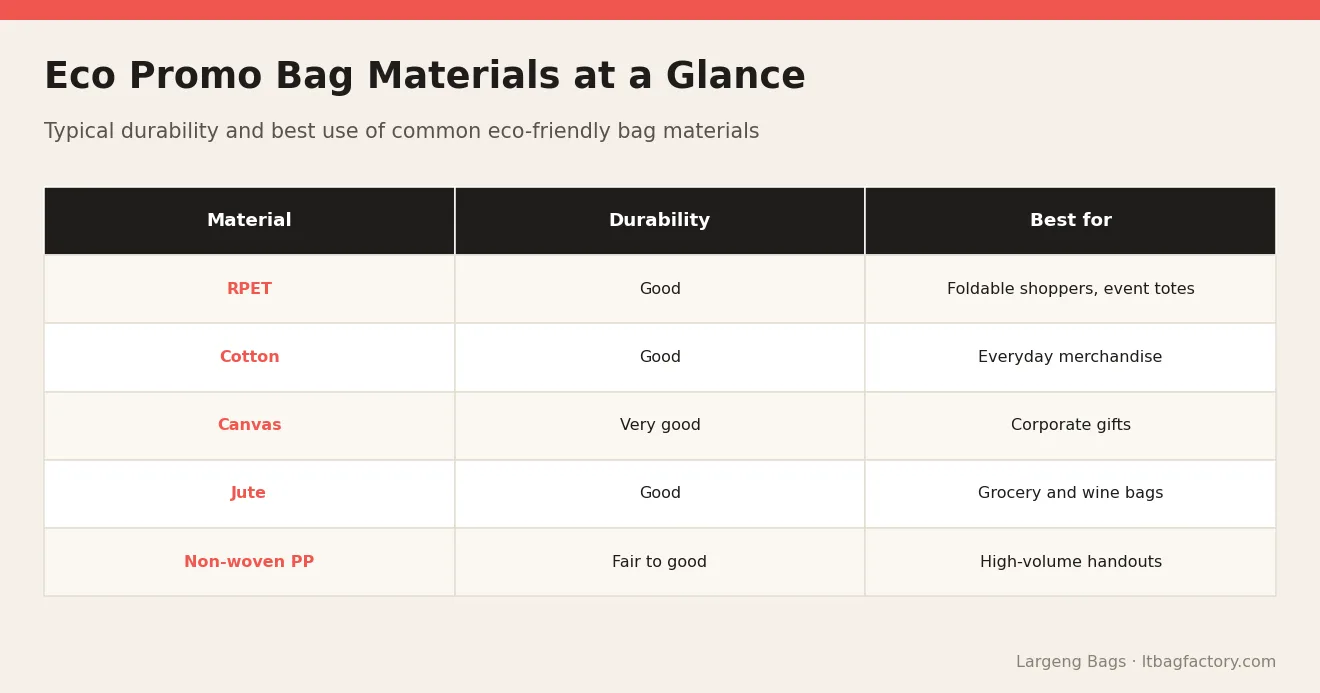
The table below summarises how common eco friendly bags materials typically perform in promotional use. Actual results depend on fabric weight, construction and finishing.
| Material | Eco angle | Durability | Best for |
|---|---|---|---|
| RPET (recycled polyester) | Made from recycled PET, often post-consumer bottles | Good; resists moisture and tearing | Foldable shoppers, drawstring bags, event totes |
| Cotton | Natural, biodegradable fibre; organic options exist | Good at mid to heavy weights | Everyday totes, retail merchandise |
| Canvas | Heavy cotton weave, long service life | Very good | Premium giveaways, corporate gifts |
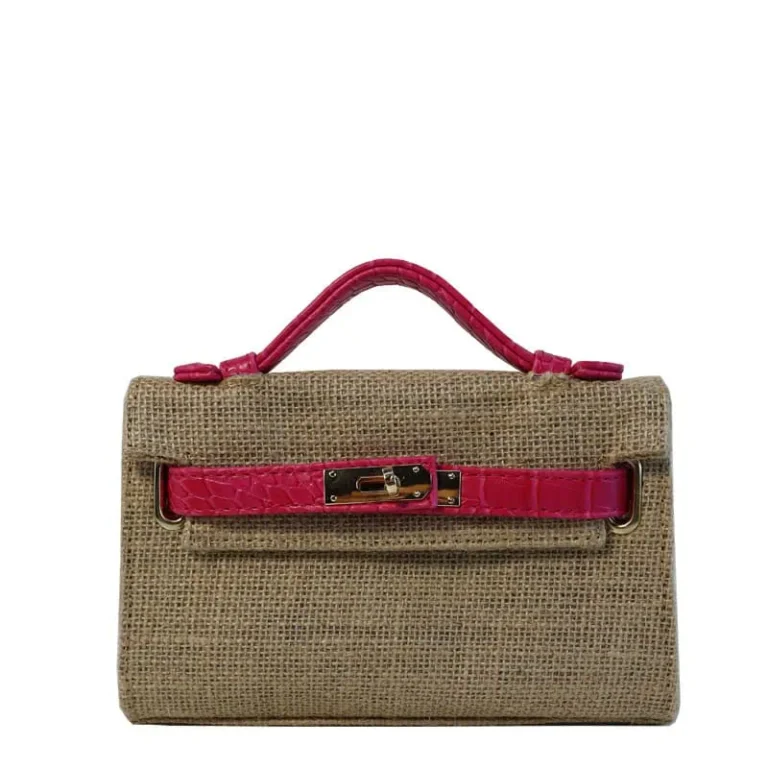
| Jute | Fast-growing plant fibre, biodegradable | Good; stiff structure | Grocery-style totes, wine bags, rustic branding |
| Kraft paper | Renewable and widely recyclable | Moderate; limited water resistance | Retail and gift packaging |
| Non-woven PP | Reusable and recyclable where PP is collected | Fair to good | High-volume trade show handouts |
Factory Price and Sustainable Bag Materials: What Drives Cost
Buyers often ask for factory price sustainable bag materials comparisons. Exact pricing depends on the full specification, but the relative cost drivers are consistent across most factories.
| Cost driver | Lower relative cost | Higher relative cost |
|---|---|---|
| Base material | Non-woven PP, kraft paper | Heavy canvas, jute with lamination, organic cotton |
| Fabric weight | Lighter weights | Heavier weights and double layers |
| Construction | Flat bag, single handle style | Gusset, lining, zip, inner pocket |
| Logo | One-colour screen print, one side | Multi-colour, both sides, embroidery |
| Documentation | Standard material | Recycled or organic content with supplier paperwork |
If budget is tight, reducing print colours or simplifying construction usually saves more than downgrading material. See how to reduce custom bag costs while keeping key requirements.
Working With an ODM Recycled Bag Factory
An ODM recycled bag factory offers existing bag designs that you brand and adjust, rather than developing a new pattern from scratch. For promotional buyers this shortens development time and lowers the risk of fit or construction problems.
Typical ODM adjustments include changing the fabric to a recycled or natural material, resizing the body, altering handle length, adding a gusset and applying your logo. OEM development, where the factory builds your own design from a tech pack, suits buyers who need a distinctive shape or feature.
If you need RPET or organic cotton specifically, mention it in the enquiry. We confirm material availability and the documentation the fabric supplier can provide on the quotation, so your sustainability claims match what is actually in the bag.
ODM is also a practical way to test a new eco material. You can run the same proven tote pattern in two materials, for example RPET and cotton, sample both, and compare hand-feel, print quality and presentation side by side before committing to one for the campaign. This approach keeps development simple while giving your client a clear, evidence-based choice.
Printing and Trims on Eco Materials
Natural and recycled materials behave differently under print. Jute has a coarse surface that suits bold, simple logos; fine text tends to break up. Cotton and canvas take screen printing and embroidery well. RPET and non-woven PP work with both screen printing and heat transfer.
Trims are easy to overlook. A cotton tote with a large plastic badge and synthetic webbing is less convincing as an eco product. Consider cotton webbing handles, woven labels, recycled-content zips where needed, and kraft paper hang tags. Keep packaging minimal: bulk packing without individual polybags is often acceptable for promotional bags.
Choosing the Right Material for Your Campaign
Match the material to the audience and the message rather than defaulting to the cheapest option.
- Trade show or conference handout: RPET or non-woven PP, printed one or two colours.
- Corporate or client gift: Canvas or heavier cotton with embroidery or a woven label.
- Retail or grocery promotion: Jute or cotton with a gusset for everyday shopping.
- Product packaging: Kraft paper or light cotton pouches.
Browse our custom canvas bags and promotional bag options for ready ODM styles in these materials.
Questions to Ask an Eco Friendly Promo Bag Factory
Before committing, ask the eco friendly promo bag factory for the fabric composition and weight in writing, what documentation the material supplier can provide for recycled or organic claims, whether inks and trims are selected to suit the eco positioning, and how the bags will be packed. A clear answer to each question gives you a specification you can stand behind when clients ask where the bags came from.
Common Mistakes With Eco Promo Bag Orders
Eco-friendly promotional bags can undermine the message they are meant to carry if the details are not thought through. These are the issues we see most often when buyers plan a sustainable campaign.
Choosing material before use
Starting with “we need jute” rather than “we need a bag people will carry to the supermarket” often leads to the wrong size or handle length. Define the use first, then pick the material that suits it.
Over-decorating the bag
Large, dense prints add ink and make the bag look like advertising, which reduces reuse. A smaller, well-placed logo often keeps the bag in circulation longer and costs less to print.
Unclear sustainability wording
Printing “100% recycled” or “organic” on a bag without matching documentation creates risk for your client. Keep claims specific and supported by the material supplier’s paperwork.
Ignoring packaging
Wrapping each eco bag in its own plastic polybag sends a mixed message. Ask whether bulk packing, paper bands or shared inner bags are suitable for your shipment and distribution method.
Leaving no time for samples
Natural fibres such as jute and cotton can vary in colour and texture between batches. Allow time for a sample so you can approve the actual look, not a catalogue photo.
What to Send for a Quote
To quote eco-friendly promotional bags accurately, please send:
- Preferred material, or two options to compare
- Bag size, gusset and handle length
- Logo artwork and print colours
- Quantity per design
- Any recycled or organic documentation you need
- Packing preference and destination
Share your brief on our contact page and we will recommend suitable materials and confirm MOQ, lead time and shipping terms on the quotation.
Frequently Asked Questions
Is RPET more sustainable than cotton for promotional bags?
It depends on use. RPET reuses existing plastic and typically needs less water to produce, while cotton is natural and biodegradable but resource-intensive to grow. A bag that is reused many times offsets more impact than one used once. For short promotional campaigns, RPET often makes sense; for long-life gifts, canvas or cotton is popular.
Can jute bags be printed with detailed logos?
Jute’s open, coarse weave limits fine detail, so small text and thin lines may not print cleanly. Bold, simple logos in one or two colours work best. For detailed artwork, many buyers choose a jute bag with a cotton or canvas panel, or add a printed woven label instead of printing directly on the jute.
Are non-woven PP bags considered eco-friendly?
Non-woven PP bags are reusable and can be recycled where polypropylene is collected, so they are often positioned as a reusable alternative to single-use plastic bags. They are lighter and less durable than canvas or cotton. For high-volume events where cost matters, they remain a practical option if designed to be reused.
How can I verify recycled content claims?
Ask for the fabric supplier’s documentation for the specific material used in your order, not a general certificate. Industry schemes typically trace recycled content through the supply chain. Keep the paperwork with your order records, and make sure marketing wording on the bag or packaging matches what the documentation actually supports.
Do eco materials change the MOQ?
Sometimes. Standard natural materials such as cotton, canvas and jute are widely available, while specific recycled fabrics or custom-dyed colours can have higher material minimums at the mill. MOQ depends on style, material and logo method, and we confirm it on the quotation once we know your specification.