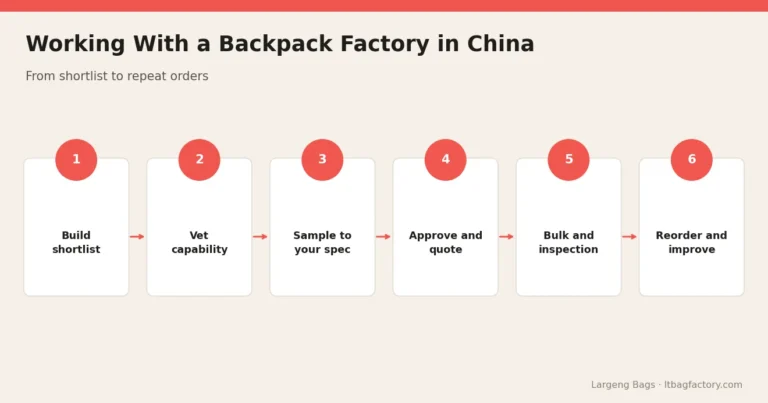
Custom bag production follows five steps: design and tech pack, material and logo confirmation, sampling in 7–15 days, bulk production with quality control, then packing and shipment. Each step has a clear approval point, and the order only moves forward once both sides sign off. This guide explains what happens at each stage, what you provide versus what our Quanzhou factory handles, and where delays usually start, so you can plan your launch or restock with fewer surprises.
Step 1: Design Brief and Tech Pack
Every project starts with a clear description of the bag. The strongest starting point is a tech pack: a document with flat sketches, dimensions, materials, colors, hardware, logo placement and packing instructions.
If you are new to the format, our guide on how to read a bag tech pack shows what each page should contain. A full tech pack is not always required, though. Many buyers start with a reference photo, a rough sketch or an existing bag, and our team builds the specification from there. See whether a manufacturer can work without a tech pack for how that works in practice.
At this stage, share your target quantity, intended market and budget range. These details shape material and construction suggestions before any cutting begins.
Step 2: Material and Logo Confirmation
Once the design is understood, we confirm the materials and branding method. We work with cotton, canvas, polyester, nylon, Oxford fabric, non-woven PP, PU leather, PVC, mesh, jute, kraft paper and genuine leather.
Logo options include screen printing, heat transfer printing, embroidery, rubber patches, woven labels, metal plates and custom zipper pullers. Hang tags and retail packaging can be added as well.
What to confirm before sampling
- Main fabric, lining and any padding or reinforcement
- Color references (Pantone codes are the clearest)
- Hardware type and finish: zippers, buckles, D-rings, snaps
- Logo method, size and exact position on each panel
- Labels, tags and packing format
Locking these choices now prevents the most common cause of repeat samples: changing a material or logo method after the first sample is made.
Step 3: Sample Production in 7–15 Days
Sample production takes 7–15 days, depending on how complex the design is and whether custom materials or hardware must be sourced. Simple totes and pouches sit at the shorter end; structured leather bags or backpacks with many compartments take longer.
You review the sample for size, construction, material feel, color and logo quality. Feedback goes back as specific written comments, ideally with photos marked up. Revisions are made and a revised sample is sent if needed.
The final approved sample becomes the reference for bulk. Our custom bag sampling process guide covers rounds, costs and how to give feedback that factories can act on.
Step 4: Bulk Production With Quality Control
After sample approval and order confirmation, materials are purchased and bulk production begins in our 5,000 m² facility with 200+ skilled workers. Bulk lead time is confirmed on the quotation, because it depends on quantity, materials and the current production schedule.
Quality control runs at several stages rather than only at the end:
- Incoming materials: fabric, leather, hardware and trims are checked against the approved specification.
- Cutting and printing: panel sizes, logo position and print quality are checked before sewing.
- In-line checks: stitching, seam strength and assembly are inspected during production.
- Final inspection: finished bags are compared with the approved sample before packing.
Many buyers also arrange their own inspection. Our pre-shipment inspection checklist lists what to check and how.
Step 5: Packing and Shipment
Finished bags are packed according to your instructions: individual polybags, retail boxes, hang tags, barcode labels or carton marks. Carton size and quantity per carton are confirmed so you can plan freight and warehouse space.
Shipping method, trade terms and payment terms are confirmed on the quotation. We ship to buyers in 30+ countries and can prepare the documents your forwarder or customs broker needs. Share any retailer or Amazon packing rules early, because they affect packaging materials ordered at step 2.
Before the goods leave, you receive a packing list showing carton count, dimensions and weights. Check it against your purchase order and forwarder booking. If you arranged a third-party inspection, the report should be approved before cartons are sealed and loaded, so any correction can still be made inside the factory rather than after arrival.
Who Provides What at Each Step
Clear responsibilities keep the project moving. The table below shows what you, the buyer, typically provide, and what the factory provides.
| Step | Buyer provides | Factory provides |
|---|---|---|
| 1. Design and tech pack | Tech pack, sketch or reference bag; target quantity and market | Feasibility review, construction and material suggestions |
| 2. Material and logo | Logo artwork (vector file), color codes, label and packing requirements | Material and hardware options, logo method advice, quotation |
| 3. Sampling | Sample approval or written revision comments | Sample within 7–15 days, revised samples if needed |
| 4. Bulk production | Order confirmation and deposit per quoted terms | Material purchasing, production, multi-stage QC, progress updates |
| 5. Packing and shipment | Shipping address, forwarder details, carton marks, any inspection booking | Packing to spec, packing list, export documents |
Common Delays and How to Avoid Them
Most delays come from decisions made late, not from sewing. The table below lists the ones we see most often.
| Delay | Why it happens | How to avoid it |
|---|---|---|
| Extra sample rounds | Design, material or logo changed after the first sample | Confirm all specs in step 2 before sampling |
| Slow feedback | Sample comments sent in pieces or without photos | Send one consolidated list with marked-up images |
| Material sourcing | Special colors, custom hardware or uncommon fabrics | Ask about stock alternatives; approve color swatches early |
| Artwork issues | Low-resolution logos or unclear placement | Provide vector files and a placement drawing |
| Packing rework | Retailer or marketplace rules shared after production | Send packing and labeling rules with the order |
For realistic planning around peak seasons, read our custom bag production timeline. Our list of common mistakes when ordering custom bags covers other avoidable problems.
Ready to start step one? See our custom bag manufacturer page, or go straight to backpacks, cosmetic bags or tote bags.
Frequently Asked Questions
How many sample rounds should I expect before bulk production?
Most projects need one or two rounds. Simple bags with confirmed materials are often approved on the first sample. Complex bags, new hardware or late design changes add rounds. Each round takes roughly the same 7–15 days, so sending a complete specification and one consolidated feedback list is the easiest way to keep the count low.
What is the minimum order quantity for a custom bag project?
It depends on the style, material and logo method, and it is confirmed on the quotation. Leather bags generally start from 100–300 pieces per style depending on design and material. For other bags, share your target quantity and we will suggest options, including flexible solutions for startups testing a new product.
Can I change the design after the sample is approved?
Small changes such as a label position can sometimes be made, but any change to materials, size or construction usually needs a new sample to protect quality. Changes after bulk materials are purchased may affect cost and timing. Confirm the final specification in writing before production starts to avoid this.
What file format should I send for my logo?
Vector files such as AI, EPS, PDF or SVG work best, because they scale cleanly for printing, embroidery and patches. Include Pantone color codes and a simple drawing showing logo size and position on each panel. If you only have a JPG or PNG, send the highest resolution you have and we will advise.
Do you send production updates during bulk manufacturing?
Yes. We share progress at key points such as material arrival, cutting, sewing and packing, with photos when useful. You can also request specific checks or arrange a third-party inspection before shipment. Final inspection results are shared before the goods leave the factory so you can confirm everything matches the approved sample.