TL;DR: Starting a private label handbag brand means partnering with an OEM factory to produce bags under your own brand name — without owning a factory. You handle branding, marketing, and sales; the factory handles materials, production, and quality control. Most brands launch successfully with an MOQ of 100–300 pieces and a budget of $3,000–$15,000 for the first production run.
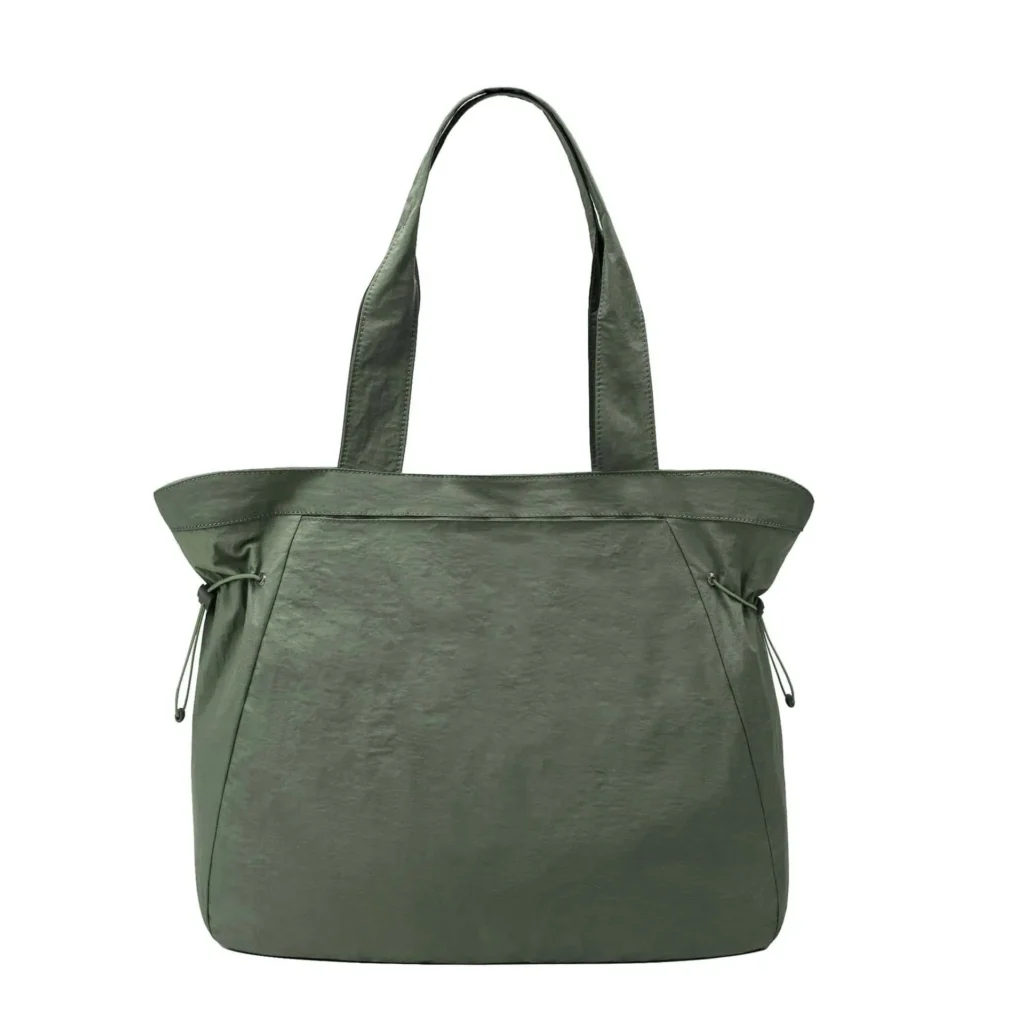
Why Private Label Handbags Are One of the Best Brand Opportunities in 2026
The global handbag market continues to grow steadily, driven by three converging forces: rising demand for “quiet luxury” (understated, high-quality pieces over flashy logos), the explosion of DTC (direct-to-consumer) brand models, and the increasing ease of working directly with overseas factories via digital communication.

Here is what makes private label handbags particularly attractive for entrepreneurs and retailers entering the market:
Margin potential is high. A handbag manufactured at $18–$35 per unit from a quality OEM factory in China routinely retails for $95–$280 online or in boutiques. That is a 4x–8x markup — significantly better than most product categories.
The barrier to entry has dropped. Minimum order quantities at reputable Chinese factories now start from 100 pieces per design, making it accessible for small brands without large capital. A decade ago, 500–1,000 pieces was the floor.
Customization is nearly unlimited. Material, color, hardware finish, lining, stitching, logo placement, and packaging can all be specified to your brand standards. You are not reselling someone else’s product; you are building a proprietary collection.
Repeat purchase rates are strong. Customers who trust a bag brand tend to stay loyal. A well-executed first collection that delivers on quality generates the word-of-mouth and repeat orders that sustain the business long-term.
Step 1: Define Your Brand Positioning Before You Design a Single Bag
The most common mistake new bag brand founders make is choosing materials and styles before deciding who they are selling to and why those customers should care.
Answer these questions before contacting any factory:
Who is your target customer?
- Working professional women aged 28–45 seeking clean, functional everyday bags?
- Eco-conscious shoppers who want sustainable materials and transparent supply chains?
- Fashion-forward younger buyers who follow trends and rotate bags seasonally?
- Men seeking minimalist leather goods for commuting and travel?
What is your price point?
- Entry-level ($40–$90): PU leather, canvas, or recycled nylon; broad market appeal
- Mid-range ($90–$200): genuine leather or premium vegan leather; quality-conscious buyers
- Premium ($200–$500+): full-grain leather or exotic materials; heritage craftsmanship positioning
What is your distribution channel?
- Instagram/TikTok DTC: prioritize visual appeal, unboxing experience, lightweight styles
- Amazon: prioritize functionality, competitive pricing, specific keyword-searchable features
- Boutique wholesale: prioritize trend-forward design and retailer margin (60% markup minimum)
- Corporate/gifting: prioritize customization speed, volume pricing, logo options
Your positioning determines everything downstream — materials, factory selection, MOQ strategy, and marketing budget.
Step 2: Choose Your Bag Category and Core Styles
Do not try to launch with 15 bag styles. The most successful private label bag brands start with 3–5 hero SKUs and expand from there.
Highest demand categories for new brands (2026):
| Category | Why It Works | Typical MOQ | Factory Cost Range |
|---|---|---|---|
| Tote bags | Universal appeal, easy to customize | 100–200 pcs | $8–$22/unit |
| Crossbody bags | Fast-growing, compact, functional | 100–300 pcs | $12–$28/unit |
| Structured handbags | Higher perceived value, better margins | 100–200 pcs | $18–$45/unit |
| Backpacks | Gender-neutral, rising demand | 100–300 pcs | $15–$35/unit |
| Mini/micro bags | Trend-driven, great for social content | 100–200 pcs | $10–$25/unit |
Recommended first collection structure:
- 1 hero tote bag (your brand’s signature piece)
- 1 crossbody bag (drives volume)
- 1 wallet or small accessory (adds average order value)
Launch with these three. Once you have 6–12 months of sales data, expand the range based on what customers actually buy.
Step 3: Select Your Materials
Material choice determines your cost structure, brand positioning, and customer perception. Here is how the main options compare:
Genuine Leather
Best for: Premium and heritage brand positioning Subcategories: Full-grain (best), top-grain (good), corrected grain (budget), bonded leather (avoid for quality brands) Pros: Develops patina, lasts decades, high perceived value, justifies premium pricing Cons: Higher cost ($25–$80/unit premium over PU), animal-derived (limits vegan market) Factory cost impact: +30–80% over PU equivalent
PU Leather (Polyurethane)
Best for: Entry-level and mid-range brands; fashion-forward seasonal collections. Pros: Consistent texture, wide color range, affordable, lightweight. Cons: Tends to peel or crack within 2–5 years of heavy use, petroleum-based. Factory cost impact: Baseline — the most common starting point for private label bags
Vegan/Plant-Based Leather
Best for: Sustainability-positioned brands targeting eco-conscious buyers Materials: Cactus leather (Desserto), apple leather, pineapple fiber (Piñatex), mushroom mycelium (Mylo) Pros: Strong brand storytelling, growing consumer demand, ESG-aligned for retail buyers Cons: Higher cost than PU, some materials still require plastic binders, limited factory availability Factory cost impact: +15–40% over PU, depending on material
Canvas and Coated Cotton
Best for: Casual, everyday, and promotional bag lines. Pros: Extremely affordable, easy to print custom designs, lightweight and durable Cons: Lower perceived value than leather alternatives Factory cost impact: Often the most affordable base material
Nylon (600D or 1680D Ballistic)
Best for: Functional backpacks, travel bags, and sport-adjacent categories Pros: Lightweight, highly durable, waterproof options available, easy to clean Cons: Less fashion-forward than leather options Factory cost impact: Comparable to mid-range PU leather
Step 4: Find and Vet Your OEM Factory
Finding a bag factory is easy. Finding one that consistently delivers quality, communicates well in English, and meets deadlines — that takes due diligence.
Where to find factories:
- Alibaba.com — largest directory; filter for “Verified Supplier” and “Trade Assurance” listings
- Global Sources — strong for established factories with export history
- Canton Fair (Guangzhou, April and October) — best for seeing samples in person and meeting factory teams
- Direct outreach — some factories, like Largeng Bags at ltbagfactory.com, have direct inquiry pages and respond quickly without Alibaba middlemen overhead
The 7-point factory vetting checklist:
- Export history to your target market — Ask for existing client references in the US, EU, or Australia. A factory that regularly exports to Western markets understands labeling, packaging, and quality expectations.
- Sample capability — Request 2–3 samples before committing to bulk. Sample lead time should be 7–15 days. If a factory cannot provide samples within this window, consider it a red flag.
- Material transparency — Ask for a written material spec sheet. “High-quality PU leather” is not a specification. “0.9mm water-based PU on 300gsm polyester base” is.
- OEM track record — Ask to see existing OEM products (without client brand logos if confidential). This shows their capability for private label work.
- QC process — Does the factory have in-house quality control? Do they conduct pre-shipment inspections? Are they open to third-party inspection (SGS, Bureau Veritas)?
- Communication — How quickly do they respond to inquiries? Do they assign a dedicated account manager who writes fluent English? Slow or vague communication at the inquiry stage predicts production problems later.
- Payment terms — Standard terms are 30% deposit upon order confirmation, 70% balance before shipment. Be cautious of any factory requesting 100% payment upfront.
Step 5: Request and Evaluate Samples
The sample stage is the most important step in the entire process. Never place a bulk production order based on factory catalog photos.
What to specify when requesting samples:
- Exact material (with thickness/denier specification)
- Exact dimensions (length × width × height in cm)
- Hardware finish (gold, silver, gunmetal, antique brass)
- Lining color and material
- Closure type (zipper, magnetic snap, turn-lock)
- Strap type and length (crossbody, top handle, removable)
- Logo placement and application method (emboss, metal plate, printed label)
What to assess when samples arrive:
- Stitching: straight, even spacing, no loose threads at seams
- Hardware: smooth operation, no rough edges, consistent finish
- Material hand feel: does it match the spec? Does it feel premium?
- Zipper pull: YKK or equivalent quality zippers should glide smoothly
- Dimensions: measure against your spec to confirm accuracy (±5mm tolerance is acceptable)
- Overall impression: Would you be proud to sell this at your target price?
If the sample is 80–90% correct, request revisions and a second sample. If it is below 70%, consider a different factory. Most factories include 1–2 revision rounds in the sample process at no extra charge.
Step 6: Place Your First Production Order
Once your sample is approved, you are ready to place the bulk order. Here is what to get in writing before production begins:
Production order must-haves:
- Signed purchase order with exact specifications, quantities, and unit price
- Confirmed production timeline (start date and completion date)
- Inspection process and acceptance criteria
- Packaging specification (polybag, box, hang tags, care labels)
- Shipping method and Incoterm (FOB recommended for first orders)
- Payment schedule (30% deposit / 70% before shipment)
Typical production timeline:
- Bulk production (standard styles): 25–40 days after sample approval and deposit
- Custom tooling required (new hardware molds, custom zippers): add 7–14 days
- Peak season delays (Chinese New Year: Jan/Feb, Golden Week: Oct): add 10–21 days buffer
Step 7: Handle Logistics and Import
Once production is complete, you need to move the goods from the factory to your market.
Shipping options:
| Method | Transit Time | Cost | Best For |
|---|---|---|---|
| Sea freight (FCL) | 18–35 days | Lowest per kg | Large orders (500+ kg) |
| Sea freight (LCL) | 25–40 days | Moderate | Medium orders (100–500 kg) |
| Air freight | 5–10 days | High | Urgent restocks, small orders |
| Express (DHL/FedEx) | 3–7 days | Highest | Samples, urgent small shipments |
Import duties (U.S. market):
- Handbags from China: typically 10–20% tariff (check current HTS code 4202 rates, as these fluctuate)
- Use a licensed customs broker for your first import — the fee ($150–$350) is worth the compliance assurance
Step 8: Launch and Build Your Brand
You now have inventory. The work of building a brand begins.
Essential launch checklist:
- Product photography (lifestyle shots and clean backgrounds on white)
- Website with clear size/dimension info and material descriptions
- Return policy that accommodates the premium positioning you are claiming
- Social content calendar with at least 30 days of content prepared before launch
- 2–3 influencer seedings or gifting campaigns timed to launch day
Content that converts for bag brands:
- “Inside my bag” collaborations with relevant creators
- Material close-up videos showing texture and hardware quality
- “How it’s made” factory content builds trust and differentiates from resellers
- Customer unboxing repost campaigns
- Styling guides showing multiple ways to wear each bag
The Cost Summary: What to Budget for Your First Collection
| Item | Estimated Cost Range |
|---|---|
| Sample production (3–5 samples) | $150–$500 |
| First bulk order (100–200 units, mid-range bag) | $2,500–$8,000 |
| Shipping and import duties | $400–$1,500 |
| Custom packaging (hang tags, tissue, boxes) | $200–$800 |
| Photography (professional shoot) | $500–$2,000 |
| Website and e-commerce setup | $300–$1,500 |
| Initial marketing budget | $500–$3,000 |
| Total first-collection launch budget | $4,650–$17,300 |
Most successful bag brand founders launch their first collection for $6,000–$12,000 all-in. This is a realistic number for a 100–150 unit run of 2–3 styles with professional packaging and photography.
FAQ: Private Label Handbag Brands
Q: Do I need a fashion background to start a bag brand?
A: No. A basic understanding of your customer and what they want is more important than design school training. Factories provide extensive guidance during the development process, and many brands work with freelance designers for initial sketches.
Q: How long does the entire process take from idea to launch?
A: Allow 3–5 months for your first collection. This includes 2–4 weeks of factory communication and sampling, 4–6 weeks of production, 3–5 weeks of shipping and customs clearance, and 2–3 weeks for photography and website preparation.
Q: What is the difference between OEM and ODM?
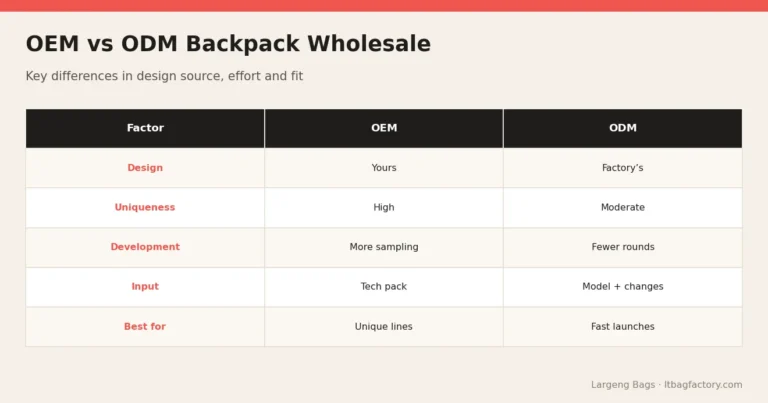
A: OEM (Original Equipment Manufacturing) means you provide the design, and the factory produces it. ODM (Original Design Manufacturing) means the factory has existing designs you select, customize with your logo, and sell as your own. ODM is faster and lower cost; OEM gives you a truly unique product.
Q: Can I start with less than 100 units?
A: Some factories accept 50-piece minimums for standard styles, though the per-unit cost will be higher. For truly custom designs, 100–200 units is the practical minimum that most reputable factories will accept.
Q: How do I protect my designs from being copied?
A: No factory guarantee is foolproof. Practical protections include signing an NDA before sharing detailed designs, working with established factories that have reputational stakes in client confidentiality, and registering your key designs as IP in your home country.
Ready to Start Your Private Label Bag Brand?
Largeng Bags (ltbagfactory.com) specializes in OEM and ODM bag manufacturing for global brands, wholesalers, and new label founders. We work with genuine leather, PU leather, canvas, nylon, and sustainable alternative materials.
What we offer:
- MOQ from 100 pieces per design
- Sample production: 7–15 days
- Bulk production: 25–40 days
- Full OEM: custom material, color, hardware, logo, and packaging
- Export to North America, Europe, and Australia
- English-speaking account management team
📩 Request a Free Sample & Quote → [Contact Us at ltbagfactory.com]
Last updated: May 2026 | Category: Bag Manufacturing Guide | ltbagfactory.com