Conference totes work best when they are useful after the event: a sensible size, sturdy handles, a clean logo and a material that fits your budget and sustainability goals. Planning them in bulk means deciding material, size, print and packing early, then working back from the event date. As a promotional giveaway bags manufacturer in Quanzhou, we produce conference and event bags for organizers and agencies. This guide covers each decision step by step.
Why Conference Totes Still Matter
Attendees need something to carry badges, brochures, notebooks and sponsor items. A good conference tote solves that on the day, then keeps your logo visible for months if people reuse it.
The goal is reuse. Bags that are too small, too flimsy or overloaded with logos tend to be left in hotel rooms. Bags that look good and carry a laptop or groceries tend to stay in use.
A well-chosen tote also supports sponsors. Their logos travel home with attendees and appear in offices, shops and airports long after the event ends, which gives the sponsorship lasting value.
For organizers, the tote is also part of the attendee experience. A well-made bag signals care and quality, while a flimsy one can make the whole welcome pack feel like an afterthought.
Choosing Materials for Conference Totes
Material sets the look, feel and budget. Common options for event bags:
| Material | Look and feel | Best for |
|---|---|---|
| Non-woven PP | Light, structured | Large events, tight budgets |
| Cotton | Soft, natural | Brand-led and eco-minded events |
| Canvas | Heavy, premium | Speaker gifts, VIP bags |
| Jute | Textured, natural | Sustainability-themed events |
| Polyester | Smooth, foldable | Full-color prints, compact packing |
See canvas vs non-woven for promotional orders for a direct comparison.
Budget per attendee usually decides the material, but consider who the bag is for. Many events use a simple bag for general delegates and a heavier canvas or cotton bag for speakers and VIP guests.
Ask for swatches of two or three materials before deciding. Feeling the fabric and seeing a sample print often settles the choice faster than comparing descriptions.
Size and Features That Encourage Reuse
Size the bag around what attendees carry: A4 documents, a laptop or tablet, and a water bottle.
- Gusset so the bag stands and holds bulky items
- Shoulder-length handles for hands-free carrying
- Inner pocket for phone and badge
- Optional zipper or snap for security
- Laptop-friendly width for tech conferences
A few practical features often matter more than an extra logo.
Color also affects reuse. Neutral bag colors such as black, navy, natural or grey tend to be carried more often than bright event colors, while a single accent color in the logo keeps the brand visible.
For multi-day events, bags that fold flat into a pocket or suitcase are appreciated by travelling attendees and are more likely to be taken home.
Working With a Promotional Giveaway Bags Manufacturer
A promotional giveaway bags manufacturer should help you balance cost, look and timing. Largeng Bags has 15+ years of bag manufacturing experience, 200+ skilled workers and a 5,000 m² facility, serving buyers in 30+ countries.
Our promotional bag manufacturing covers non-woven, drawstring, cooler and tote styles, and our tote bag range includes cotton, canvas and jute options. Share the event profile and we will suggest materials that fit.
Tell us your attendee profile, such as a tech, medical, academic or trade audience, so our suggestions match what those attendees will actually carry.
We can also advise on quantity splits if you need several bag types, so that each design reaches a practical production quantity without overspending on items that will not be used.
Branding: Organizer and Sponsor Logos
Many conference totes carry an event logo plus sponsor logos. Keep the design clean so people will reuse the bag.
| Approach | Design idea | Reuse potential |
|---|---|---|
| Event only | One bold logo on front | High |
| Event plus lead sponsor | Front logo, sponsor on back | High |
| Many sponsors | Sponsor grid on one side | Medium |
| Date-specific | Event name and year | Lower after event |
Screen printing suits simple logos, while heat transfer printing handles full-color sponsor artwork.
Always check sponsor logos at actual print size on the sample. Fine text and thin lines can disappear on textured materials such as jute or non-woven fabric.
Planning the Timeline Backward From the Event
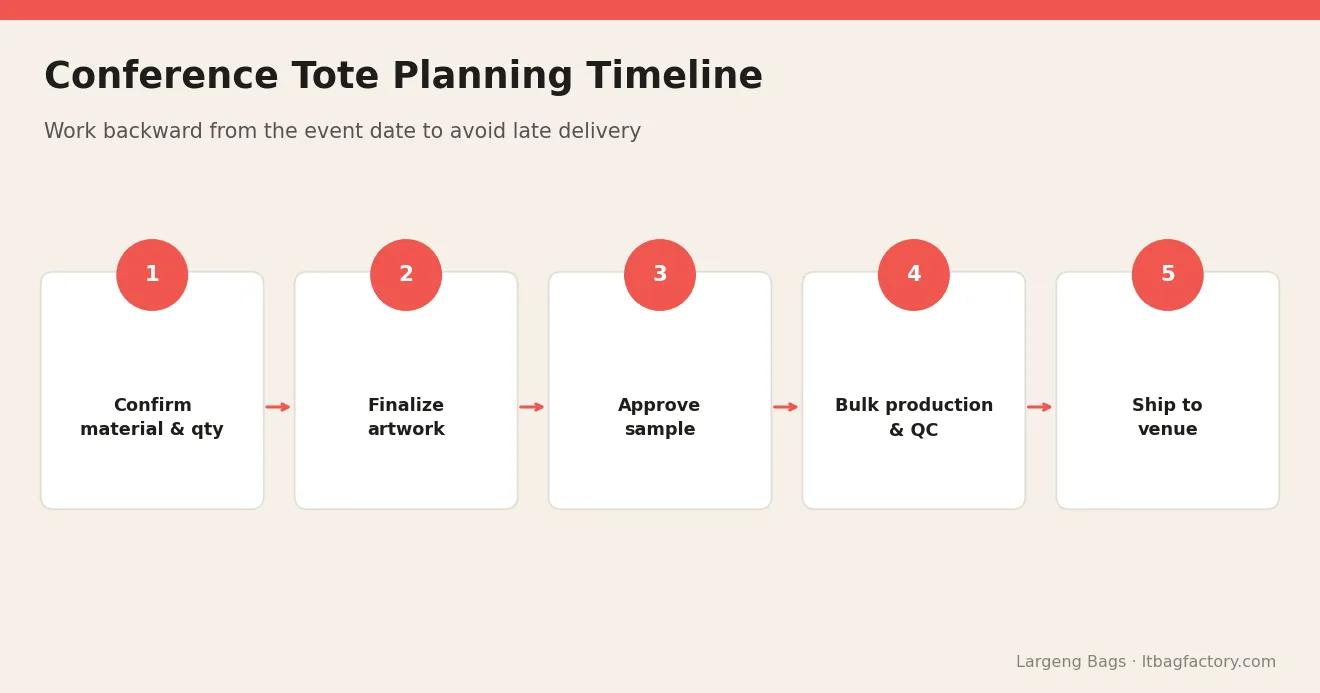
Start early. Timing problems are the most common issue with event bags. Work backward from the event date:
- Confirm material, size and quantity
- Finalize artwork and sponsor logos
- Approve the sample (samples take 7–15 days)
- Bulk production and quality control
- Shipping, customs and delivery to venue
Bulk lead time and shipping terms are confirmed on the quotation. Our custom bag production timeline explains each stage.
Leave extra time for artwork approval when several sponsors are involved, because each sponsor may need to sign off on logo size and color.
Build in a buffer for shipping and customs, especially for international events, so the bags are at the venue before setup day rather than on the morning attendees arrive.
Packing and Delivery for Events
Packing affects how fast volunteers can prepare bags on site. Options include flat-packed bulk cartons, individually folded bags, or bags pre-packed with inserts if you supply them. Mark cartons clearly by event and bag type if several designs ship together.
If you need a mixed order, such as delegate totes plus speaker bags, confirm quantities for each in one quote so production and packing are planned together.
If bags are going to several venues or cities, list each address and quantity in advance so cartons can be packed and labeled by destination.
Ask for a packing photo before shipment so your team knows how cartons will look on arrival and can plan storage and setup space at the venue.
Common Conference Tote Mistakes to Avoid
Most problems with event bags come from a few avoidable mistakes:
- Ordering too late: leaving no time for sampling or shipping delays.
- Too many logos: crowded designs reduce reuse after the event.
- Wrong size: bags that cannot fit an A4 folder or laptop are quickly abandoned.
- Weak handles: heavy brochures can tear light handles on the first day.
- Printing the date: leftover bags cannot be used at the next event.
| Mistake | Better approach |
|---|---|
| Late order | Start planning several months ahead |
| Crowded design | One main logo, sponsors on back |
| Thin handles | Reinforced stitching at handle joints |
Avoiding these points costs little and makes a noticeable difference to how attendees and sponsors see the bag.
If the date is tight, tell us at the start. We will say honestly whether the timeline can work and which materials or print methods help keep it on track.
What to Send for a Quote
To quote conference totes quickly, please send:
- Event date and delivery location
- Quantity and any mixed designs
- Preferred material and size
- Logo and sponsor artwork files
- Packing requirements
Contact us through our contact page and our team will reply with suggestions and a quotation.
Frequently Asked Questions
How many extra conference totes should we order?
Many organizers add a small buffer above expected attendance to cover late registrations, staff, speakers and damaged bags. The right margin depends on how firm your registration numbers are. Unused bags without dates can be reused at future events, which is one reason to avoid printing the year on the bag. Store leftover bags flat and dry for later use.
Can each sponsor have a different bag design?
Yes, but each design usually has its own starting quantity and setup, so splitting a small order across many designs can raise costs. A common alternative is one shared bag with sponsor logos on the back, plus branded inserts. Discuss options before artwork is finalized. Sponsor inserts are often cheaper than extra designs.
Are eco-friendly materials suitable for conference totes?
Yes. Cotton, jute and recycled polyester are popular for events with sustainability goals. Durability matters too: a sturdy bag reused many times is often a better eco choice than a light bag that is thrown away. Ask for material swatches to compare feel and print quality. Neutral colors also help eco bags get reused.
Can you insert brochures or items into the bags before shipping?
In some cases we can pack items you supply into bags, depending on the items and the quantity. It must be planned in advance so materials arrive on time and packing labor is included in the quotation. Many organizers prefer to fill bags on site to include last-minute materials. Confirm insert quantities and packing layout early.
What is the best print method for many sponsor logos?
Heat transfer printing is often better for many logos or full-color artwork because it reproduces detail and multiple colors in one application. Screen printing is efficient for one or two solid colors. Send all sponsor files together so the factory can recommend the most practical method. Ask for a printed sample to check small sponsor logos.